Biggest Legion Y27Q 20 Buying Mistakes (And How to Avoid Them)
The Lenovo Legion Y27Q 20 has long been celebrated as a titan in the 1440p gaming monitor space. Known for its blistering 165Hz refresh rate and the inclusion of LG’s highly-regarded Nano IPS panel technology, it represents a sweet spot for gamers who refuse to compromise between speed and visual fidelity. However, as with any high-end piece of hardware, the path to a satisfying purchase is fraught with potential pitfalls. Many consumers approach the acquisition of a gaming monitor with a "specs-first" mentality, failing to account for the nuances of panel lottery, firmware revisions, and ergonomic requirements. To ensure that this investment delivers the intended performance boost to a gaming setup, one must look beyond the marketed numbers and understand the practical realities of owning this specific display. This article explores the most common mistakes buyers make when considering the Y27Q 20 and provides actionable advice on how to navigate the market effectively.
Understanding the Core Appeal of the Y27Q 20
Before diving into the mistakes, it is essential to understand what makes the Legion Y27Q 20 such a sought-after model. At its heart, the monitor features a 273-inch In-Plane Switching (IPS) panel with a QHD resolution of 2560 x 1440. This resolution is widely considered the gold standard for 27-inch screens, providing a high pixel density that ensures sharp text and detailed textures without requiring the extreme GPU horsepower demanded by 4K gaming. The inclusion of Nano IPS technology means that the panel utilizes a layer of nanoparticles to absorb excess light wavelengths, resulting in more vibrant and accurate color reproduction compared to standard IPS screens. With a 165Hz refresh rate and a response time geared toward competitive play, it bridges the gap between professional eSports monitors and high-end multimedia displays. Yet, even with these impressive credentials, buyers often find themselves dissatisfied due to preventable errors in the purchasing process.
Mistake 1: Ignoring the Specific PC Hardware Requirements
One of the most frequent errors is miscalculating the hardware necessary to drive the Y27Q 20 to its full potential. Because it is a 1440p monitor with a high refresh rate, it occupies a demanding middle ground. A buyer upgrading from a standard 1080p 60Hz screen may not realize that they are asking their Graphics Processing Unit (GPU) to push nearly double the pixels at nearly triple the speed. Running modern AAA titles at 1440p and maintaining a frame rate near 165 FPS requires a robust mid-to-high-tier GPU. If the computer is equipped with an older or budget-oriented card, the monitor’s primary benefit—its exceptional smoothness—will be largely wasted. Furthermore, users often forget the importance of the DisplayPort version. To achieve the full 165Hz at 1440p with 10-bit color, a DisplayPort 1.4 connection is essential. Relying on an older HDMI cable or an outdated port on a laptop can result in being locked at a lower refresh rate, effectively nullifying the premium paid for the monitor's speed.
Mistake 2: Overlooking the Implications of Nano IPS Oversaturation
Nano IPS technology is a double-edged sword that catch many buyers off guard. While the technology allows for a wide color gamut—covering approximately 98% of the DCI-P3 space—this results in what many perceive as "oversaturation" when viewing standard content. Most web content, older games, and digital photos are designed for the sRGB color space. When viewed on a wide-gamut monitor like the Y27Q 20 without proper calibration or the use of an sRGB clamp, colors can appear unnaturally neon. Reds might look radioactive, and skin tones can appear flushed or "sunburnt." Buyers often mistake this for a defect or simply find it tiring for the eyes during long work sessions. Failing to check if the monitor has a reliable sRGB emulation mode or if the user is willing to use software tools to manage color profiles is a major oversight. Those who prioritize absolute color accuracy for professional work but do not have the patience for color management often find the Y27Q 20’s default vibrancy distracting rather than impressive.
Mistake 3: Underestimating the Space Required by the Stand
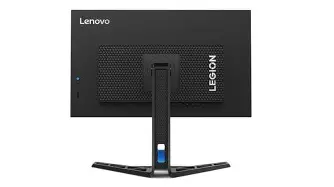
The Legion Y27Q 20 features a distinctive "v-shaped" stand that is both stylish and sturdy. However, its footprint is remarkably large and deep. Many buyers with standard-depth desks (24 inches or less) find that the stand forces the monitor too close to their face, leading to eye strain and a cramped workspace. The wide span of the legs also makes it difficult to place peripherals like large mousepads or secondary speakers directly in front of the screen. A common regret is not measuring the desk surface before purchase. While the monitor is VESA mount compatible (100x100mm), many users do not want to spend additional money on a third-party monitor arm. If a buyer is committed to using the included stand, they must ensure they have a deep desk or a layout that accommodates the aggressive, gamer-centric geometry of the Legion base.
Find top-rated Electronics products at great prices.
View Offers →Detailed Product Analysis: Performance and Features
To truly avoid buying mistakes, one must understand the technical nuances of the display. The Legion Y27Q 20 is not just a collection of specs; it is a finely tuned machine with specific behaviors. The motion handling is perhaps its strongest suit. Unlike some cheaper IPS panels that suffer from "ghosting" or "smearing" in fast-moving scenes, the Y27Q 20 maintains excellent clarity. This is largely due to the fast transitions fostered by the Nano IPS chemistry. However, this speed comes with a trade-off in contrast ratio. Like most IPS panels, the Y27Q 20 typically sits around a 1000:1 contrast ratio, and in many real-world units, this can dip lower. In a dark room, blacks will look more like dark grays, and "IPS Glow" (a faint light leakage at the corners) is a common characteristic. Buyers who primarily play atmospheric, dark games or watch movies in low-light environments might find this lack of deep contrast disappointing compared to Vertical Alignment (VA) panels or OLED alternatives.
Product Pros and Cons
- Pro: Exceptional motion clarity with a 165Hz refresh rate that feels responsive in competitive shooters like Counter-Strike or Valorant.
- Pro: Exceptional build quality with a premium feel, featuring a metallic finish on parts of the stand and a built-in headphone hook.
- Pro: Wide color gamut provides a "pop" to modern HDR-enabled games and vibrant landscapes, making the 1440p resolution look even sharper.
- Pro: Full ergonomic adjustments including height, tilt, swivel, and pivot, allowing for a highly customizable viewing position.
- Con: Contrast performance is mediocre, leading to a "washed out" look in very dark scenes or horror games played in a dark room.
- Con: Lack of a dedicated sRGB hardware toggle in some firmware versions makes it difficult to "tame" the wide color gamut for standard tasks.
- Con: The stand consumes a significant amount of desk real estate, which is impractical for small or narrow setups.
- Con: Potential for "panel lottery," where some units exhibit more significant backlight bleed or glow than others.
Mistake 4: Not Verifying Firmware and Revison History
During its production cycle, the Legion Y27Q 20 has seen various firmware iterations. Early adopters reported specific issues such as flickering when used with certain NVIDIA cards or difficulties in maintaining the 165Hz overclock. While Lenovo has addressed most of these through updates, applying a firmware update to a monitor is not as straightforward as updating a smartphone or a PC. It often requires specific software and, in some cases, can be risky if interrupted. A common mistake is buying a used or "old stock" unit without verifying the manufacturing date or the firmware version. Buyers should always check if their unit is running the latest stable version to ensure maximum compatibility with G-Sync and FreeSync technologies. Failing to do so can lead to frustrating visual artifacts that are software-based rather than hardware defects.
Comparative Analysis: The Y27Q 20 vs. Popular Alternatives
Context is everything when purchasing electronics. The Y27Q 20 exists in a crowded market alongside competitors like the LG 27GL850 and the Dell S2721DGF. Interestingly, many of these monitors use the exact same LG Nano IPS panel. The differences lie in the tuning, the housing, and the warranty. A buyer makes a mistake when they assume all Nano IPS monitors are identical. The Legion often offers a more robust stand and a slightly higher "overclocked" refresh rate (165Hz vs 144Hz on some early competitors), but it might lack the extensive service network of a brand like Dell. Choosing the Lenovo without comparing the current market pricing of its "panel siblings" can lead to overpaying for a virtually identical visual experience.
| Feature | Legion Y27Q 20 | Standard 1440p IPS | VA Panel Alternatives |
|---|---|---|---|
| Refresh Rate | 165Hz | 144Hz | 144Hz - 240Hz |
| Color Tech | Nano IPS (DCI-P3) | Standard IPS (sRGB) | Quantum Dot or Standard |
| Contrast Ratio | ~800:1 to 1000:1 | 1000:1 | 2500:1 to 4000:1 |
| Response Time | Very Fast (1ms GtG) | Moderate (4ms-5ms) | Varies (can suffer from black smearing) |
| Best Use Case | Mixed Gaming / Photo Work | General Office / Light Gaming | Media Consumption / Dark Room Gaming |
Mistake 5: Misunderstanding "G-Sync Compatible" vs. "Native G-Sync"
The Y27Q 20 is officially "G-Sync Compatible" and supports AMD FreeSync. A frequent mistake among buyers is believing this monitor contains a dedicated G-Sync hardware module. It does not. It uses the VESA Adaptive-Sync standard to achieve variable refresh rates. While the experience is excellent for the vast majority of users, there are minor differences. Native G-Sync modules offer variable overdrive, which optimizes response times across the entire frequency range. G-Sync Compatible monitors like the Y27Q 20 have fixed overdrive settings. This means that if your frame rate fluctuates wildly (dropping from 160 FPS down to 60 FPS), you might notice slight overshoot or blur at the lower end of the range if the overdrive is set too high. Buyers who are sensitive to these nuances should be aware of the distinction to set their expectations accordingly. To avoid issues, one should always use the "Normal" overdrive setting rather than "Extreme" to minimize visual artifacts during frame rate dips.
Find top-rated Electronics products at great prices.
Browse Now →Buying Guide: How to Properly Evaluate a New Unit
Once the decision is made to purchase the Legion Y27Q 20, the process is not over. To avoid "post-purchase dissonance," a buyer must perform a rigorous evaluation during the return window. This is the only way to safeguard against the aforementioned panel lottery. The following steps provide a roadmap for a successful acquisition:
- Inspect for Dead Pixels: Use a full-screen color test (red, green, blue, white, black) to check for stuck or dead pixels. A QHD screen has millions of pixels, and it is statistically possible for one or two to be defective.
- Test for Backlight Bleed: In a dark room, display a completely black image on the screen. While some "glow" is normal for IPS, distinct yellow or white "clouds" or bleed from the edges that are visible during normal gameplay or movie watching are a valid reason for an exchange.
- Verify Refresh Rate Settings: Immediately enter the Windows Display Settings and the GPU Control Panel (NVIDIA/AMD) to ensure 165Hz is selectable. If it is capped at 60Hz or 100Hz, check your cable and port compatibility.
- Assess Color Comfort: Spend time with the monitor for both gaming and productivity. If the oversaturation feels overwhelming, explore the monitor's On-Screen Display (OSD) for the "Novice" or color-managed profiles, or consider a software-based sRGB clamp.
- Check the Stand Stability: Ensure the monitor sits level. Some buyers have noted a slight tilt in the mounting arm of early units. While it can often be adjusted, a significant lean suggests a manufacturing defect.
The Hidden Costs: Cables and Calibration
A final mistake involves failing to budget for the peripheral costs of a high-end monitor. While Lenovo includes cables in the box, they are not always long enough for every desk setup, especially for those using standing desks. Buying a cheap, uncertified DisplayPort cable from a bargain bin can introduce intermittent black screens or signal loss. Furthermore, while the Nano IPS panel is factory calibrated to a degree, those seeking professional-grade accuracy for work will need a hardware colorimeter. Understanding that the purchase price of the monitor might only be 90% of the total cost to get it working perfectly is a hallmark of an experienced buyer.
Conclusion
The Lenovo Legion Y27Q 20 remains a formidable choice in the electronics market, offering a blend of speed and color depth that few competitors can match at its price point. However, the quality of the experience is heavily dependent on the buyer’s preparation. By avoiding the common mistakes of underestimating hardware requirements, ignoring the specifics of Nano IPS color behavior, and neglecting the physical constraints of the stand, a consumer can transition from a casual shopper to a satisfied power user. The key is to recognize that a gaming monitor is an ecosystem—it requires the right GPU, the right cables, the right desk space, and the right eye for calibration. When these elements align, the Y27Q 20 transforms from a piece of hardware into a window that elevates every gaming session and creative project. Diligence during the buying phase ensures that the only surprises encountered are the stunning visuals of the games themselves, rather than technical frustrations that could have been easily avoided.