Why Everyone is Buying the Amazon Fire Tv 2018 (Full Review)
I've been using the Amazon Fire TV 2018 model for several months now, and I wanted to write a frank, detailed review from the perspective of someone who unboxed it, set it up, and lived with it day to day. I bought this unit because I wanted a simple, affordable way to get 4K HDR streaming to a bedroom TV that didn't have a great smart platform built in. What I found was a mix of real strengths and a few annoyances — enough to recommend it to many people, but also worth mentioning the trade-offs so you can decide if it fits your needs.
Introduction: Why I picked the Fire TV 2018
Before I bought the Fire TV 2018, I compared several streaming boxes and sticks. I wanted something that offered 4K streaming, a responsive interface, reliable access to all major apps (Netflix, Disney+, Hulu, etc.), and a voice remote that actually made navigation faster. I wasn't looking to spend a fortune, and I already own a couple of Alexa devices in the house, so the Fire TV felt like a natural fit.
Setup was straightforward. The unit detected my Wi‑Fi and walked me through signing into my Amazon account and downloading apps. In my experience the initial setup process took about 10–15 minutes including app updates and a system update that ran after the first boot.
First impressions after months of use
Over the months I've noticed that the Fire TV nails the basics extremely well. Streaming 4K HDR content looks excellent when the source material is good; colors are punchy, and motion handling is fine for TV and movies. The processor on the 2018 model is snappy for navigation and app switching — I rarely felt the device slowing me down during everyday use.
The Alexa voice remote is genuinely useful. I used it to launch apps, search for titles across services, and control playback hands-free. In my experience voice searches save time and are more accurate than I expected. The remote's Bluetooth connection also stayed paired without me needing to constantly re-pair it.
That said, there are things that annoyed me enough to mention. The home screen is crowded with promoted content — recommended tiles often favor Amazon's own services and suggestions that feel like ads. I noticed that even after hiding some suggestions, the interface still pushed sponsored tiles in prominent spots. If you prefer a clean launcher without commercial pressure, this will be noticeable.
Performance and day-to-day behavior
For the type of use I give a secondary TV — streaming shows, occasional movies, and casting family videos — the Fire TV performed reliably. Apps launched quickly, and 4K titles buffered smoothly on my home network. I did, however, experience a couple of app crashes over the months: one time an app required a forced restart, and another time an update introduced a temporary bug that was fixed within a week. Those were minor headaches but worth noting.
One technical limitation I ran into was local storage. The Fire TV has limited internal storage, which means you can't install a huge number of large sideloaded apps or games. I kept an eye on storage and removed apps I rarely used to keep the device running smoothly. If you plan to install many third‑party/apk apps, that limitation will matter.
User interface and content discovery
I like the overall Fire OS look: large tiles, easy access to the most important sections (Home, Live, Your Apps & Channels, Settings). However, content discovery leans heavily toward Amazon-promoted material. I personally found that voice search is the fastest way to get to content I actually wanted to watch.
Looking for the best TVs & Home Theater deals on Amazon?
Shop Amazon →My house uses both Amazon and non‑Amazon services, and the Fire TV did a good job aggregating results across apps during a voice search. When I asked Alexa for a title, the system showed where that title was available and allowed me to jump directly into the correct app, which saved me time compared to manually opening apps and searching.
Remote, voice control, and smart home features
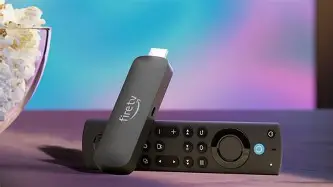
The included remote has a minimal design and feels solid in the hand. I appreciated the dedicated voice button for Alexa and the physical volume and power controls (on the newer remotes); they let me control the TV and A/V receiver without a second remote. I used Alexa routines a few times to trigger smart lights and dim the room before movie night, and the Fire TV integrated into that workflow without friction.
One quirk: the remote's voice accuracy depends on room noise and mic sensitivity. In quiet rooms it's excellent; in a crowded living room it occasionally required a repeat. Also, if you don't want voice features, there isn't an obvious way to remove the mic from the experience, only to avoid using it.
Picture and audio quality
Watching HDR content looked noticeably better than standard HD on my 4K TV. The Fire TV streams HDR when available and upscales lower-resolution content well. I tested a variety of services and found consistent results: 4K movies on supported platforms looked sharp and color-rich.
Audio was solid for regular TV and movies, but if you're an audiophile using a high-end soundbar or AVR you may need to tweak settings on both the TV and receiver to get the best passthrough behavior. In my setup, Dolby Digital pass-through worked fine for most apps, though advanced audio formats can be finicky depending on your receiver's compatibility.
Apps, ecosystem, and compatibility
The Fire TV has all the major streaming apps I use: Netflix, Disney+, Hulu, HBO Max (now Max), and more. I also use Plex occasionally for my personal media library. App availability has improved over the years, but there's still the occasional app with a slightly different or reduced feature set compared to other platforms.
One thing I appreciated: regular software updates. Over the months I saw several system updates that improved stability and added small features. That's a comfort when you plan to keep the device for years.
What I liked — Pros
- Great value for 4K HDR streaming: In my experience the picture quality for streaming movies and shows is excellent for the price.
- Fast, responsive UI: Apps load quickly and navigation feels snappy.
- Alexa voice remote: Voice search and smart home integration saved me time and were genuinely useful.
- Solid app support: All major streaming services are available and work reliably.
- Regular updates: Amazon pushed stability and feature updates across the months I used it.
What bothered me — Cons
- Home screen promotions: The UI pushes Amazon-promoted content and sponsored tiles in a way I found intrusive.
- Limited internal storage: If you sideload apps or install many games, you'll run out of space.
- Occasional app instability: I experienced a few crashes that required a restart or an update to fix.
- Not ideal for heavy gaming: It's fine for casual games, but not for high-performance gaming.
- Advanced audio quirks: Dolby and advanced passthrough depend on your receiver and require manual configuration sometimes.
Comparison: Fire TV 2018 vs other popular streamers
| Feature | Fire TV (2018) | Roku Streaming Stick+ | Chromecast with Google TV |
|---|---|---|---|
| Resolution | 4K (supports HDR) | 4K (supports HDR) | 4K (supports HDR) |
| Voice assistant | Alexa built-in via remote | Roku Voice (remote) / Works with Alexa/Google via devices | Google Assistant built-in |
| Home screen | Content-forward, Amazon-promoted | Cleaner, device-agnostic recommendations | App-forward, Google suggestions |
| App availability | Major apps + Amazon ecosystem | Very broad app library, platform-agnostic | Major apps + Google ecosystem |
| Best for | Amazon/Alexa users who want value 4K streaming | Users who want a neutral, ad-light experience | Users invested in Google ecosystem and casting |
Buying guide: Is the Fire TV 2018 right for you?
When deciding whether to buy the Fire TV 2018, I weighed the following factors and you should too:
1. Do you want 4K HDR on a budget?
If your TV supports 4K and HDR and you want an inexpensive way to stream that content, the Fire TV 2018 is a strong contender. In my experience it delivers excellent visual quality for its price range.
Find top-rated TVs & Home Theater products at great prices.
Browse Now →2. Are you invested in the Amazon ecosystem?
If you already use Alexa, Echo devices, and Amazon services, the Fire TV adds a cohesive, integrated experience. I liked being able to use routines and control my smart lights through the TV. If you don't use Alexa or prefer Google Assistant, you may prefer alternative devices.
3. Do you mind promoted content on the home screen?
The Fire TV home screen prioritizes Amazon content and recommended tiles. If you prefer a neutral, ad‑light experience, consider other platforms like Roku that aim to be more platform-agnostic. Personally, the ads annoyed me at first, but I learned to use voice search and the Your Apps & Channels area to get around most of it.
4. How much local app storage do you need?
If you're planning to sideload many apps, play lots of Android games, or install large apps, the Fire TV's internal storage may be a limitation. I kept mine lean — installing only the streaming apps I used regularly — and had a smooth experience.
5. Do you need advanced audio passthrough?
If your home theater setup requires flawless Dolby Atmos or other high-end passthrough formats, test the specific combinations of TV, receiver, and Fire TV, because results can vary. For typical TV and movie watching, audio performance was more than adequate in my setup.
6. Portability and placement
The compact size makes the Fire TV easy to tuck behind a TV or into an entertainment center. If you need a device for travel, it's convenient. Keep in mind the range of the remote and Wi‑Fi reception when placing it inside closed cabinets.
Tips from my experience
- Use voice search as your primary navigation method — it saved me time and reduced interaction with promotional tiles.
- Regularly check for system and app updates; they fixed a couple of the small glitches I saw.
- Clear out unused apps periodically to avoid storage-related slowdowns.
- If you rely on local media, set up Plex or a similar server — that workflow worked smoothly for me.
- For the best audio experience, experiment with the TV and receiver passthrough settings; the defaults may not be ideal for all setups.
Final thoughts and natural conclusion
After using the Fire TV 2018 every day for several months, I'm satisfied with the purchase. It delivered what I wanted most: affordable 4K HDR streaming, a responsive interface, and a voice remote that actually helps. The home-screen promotions and limited storage are real downsides, but they didn't outweigh the benefits for me.
If you're already comfortable with Alexa and want a cost-effective way to upgrade a non-smart TV or replace an older streaming stick, the Fire TV 2018 is a great choice. If you prioritize a totally neutral UI or need generous local app storage, you may want to consider alternatives. Overall, in my experience the Fire TV 2018 strikes a very attractive balance of performance, features, and price — which is why so many people, myself included, have chosen it.